Cracked Chimney Crown: What It Is, Why It Matters?
When homeowners think about chimney maintenance, they often focus on chimney cleaning or fireplace inspections. However, one of the most overlooked yet essential components of a chimney system is the chimney crown. A cracked chimney crown may seem like a minor issue at first, but it can quickly lead to water intrusion, masonry deterioration, structural damage, and expensive repairs if left untreated.
Understanding what a chimney crown does, how it becomes damaged, and why prompt repairs matter can help protect both your chimney and your home for years to come.
What Is a Chimney Crown?
A chimney crown is the concrete or cement structure located at the very top of a masonry chimney. It covers the chimney while allowing the flue liner to extend through the center.
Its primary purpose is to direct rainwater, snow, and moisture away from the chimney structure. Unlike a chimney cap, which covers the flue opening, the chimney crown protects the entire top surface of the chimney.
A properly constructed chimney crown should:
- Prevent water from entering the chimney structure
- Direct water away from masonry
- Protect bricks and mortar joints
- Reduce freeze-thaw damage
- Extend the life of the chimney
Without a properly functioning crown, moisture becomes one of the chimney’s biggest enemies.
What Causes a Cracked Chimney Crown?
Several factors contribute to chimney crown damage over time.
1. Freeze-Thaw Cycles
Water enters tiny cracks in the crown. During colder temperatures, that water freezes and expands by approximately 9%, causing the cracks to grow larger. This repeated cycle gradually weakens the concrete until significant damage develops.
2. Weather Exposure
A chimney crown is constantly exposed to:
- Heavy rain
- UV sunlight
- High temperatures
- Wind
- Snow
- Ice
Years of weather exposure naturally wear down the concrete surface.
3. Poor Construction
Some chimney crowns are built too thin or with improper concrete mixtures. Others lack the necessary overhang or drip edge that helps move water away from the chimney.
Improper construction significantly shortens the life of the crown.
4. Normal Aging
Even a properly built chimney crown will eventually deteriorate. Concrete naturally develops hairline cracks over time due to expansion and contraction.
Routine inspections help identify these small cracks before they become major structural issues.
Why a Cracked Chimney Crown Matters
A cracked chimney crown allows water to enter areas where it should never reach.
Once moisture penetrates the chimney, it can lead to:
Water Damage
Water is responsible for more chimney deterioration than fire. Moisture weakens brick, mortar, and concrete while encouraging mold growth inside the chimney system.
Damaged Masonry
Water can cause:
- Cracked bricks
- Loose mortar joints
- Spalling bricks
- Masonry staining
- Structural weakening
Chimney Leaks
Many homeowners assume roof leaks originate from shingles when the actual source is a damaged chimney crown allowing water into the home.
Rusted Components
Water entering the chimney can corrode:
- Fireplace dampers
- Chase covers
- Chimney caps
- Metal flue liners
- Firebox components
Rust can reduce the lifespan of these important chimney parts.
Interior Home Damage
Unchecked water intrusion may eventually cause:
- Ceiling stains
- Wall discoloration
- Peeling paint
- Mold growth
- Damaged insulation
- Wood rot
Repairing interior damage often costs far more than fixing the chimney crown itself.
Signs You May Have a Cracked Chimney Crown
Homeowners should watch for these warning signs:
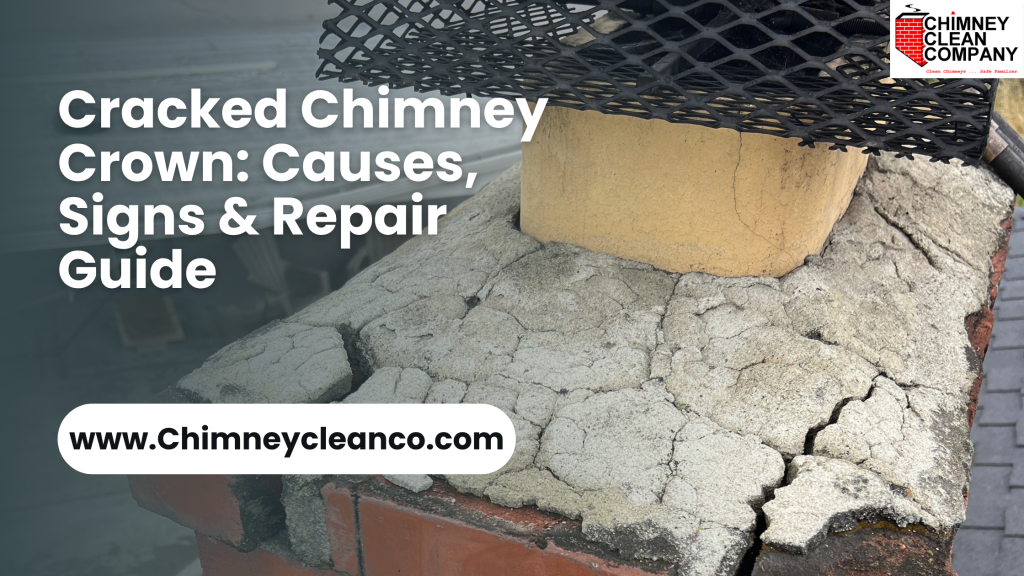
- Visible cracks on the top of the chimney
- Pieces of concrete breaking away
- White staining (efflorescence) on chimney bricks
- Water inside the fireplace
- Musty odors
- Loose bricks
- Chimney leaks after rainfall
- Rust on the damper or fireplace components
Many chimney crowns develop damage that is difficult to see from the ground, making annual professional inspections especially important.
Can You Repair a Chimney Crown Yourself?
Although DIY chimney crown repair products are available, they can be messy and difficult to apply correctly. Chimney crown repairs require proper evaluation and materials.
Using roofing cement, household caulk, or general concrete patch products may temporarily hide the problem while allowing water to continue penetrating the chimney.
Professional chimney technicians use products specifically formulated to withstand extreme temperature changes and weather exposure.
How to Prevent Chimney Crown Damage
Preventive maintenance can significantly extend the life of your chimney.
Recommended practices include:
- Schedule annual chimney inspections.
- Repair small cracks before they spread.
- Apply professional waterproofing when appropriate.
- Install a properly fitted chimney cap.
- Address water leaks immediately.
- Keep masonry in good condition.
Preventive maintenance is almost always less expensive than rebuilding a damaged chimney.
How Often Should a Chimney Crown Be Inspected?
The National Fire Protection Association (NFPA) recommends annual chimney inspections, even if the fireplace is used infrequently.
During an inspection, trained technicians evaluate:
- Chimney crown condition
- Masonry integrity
- Flashing
- Chimney cap
- Flue liner
- Water intrusion
- Overall chimney safety
Regular inspections help identify minor issues before they develop into costly repairs.
Why Choose Chimney Clean Company?
Since 1990, Chimney Clean Company has helped homeowners throughout the Bay Area protect their chimneys with professional inspections, repairs, and preventive maintenance.
Our experienced technicians carefully evaluate every chimney crown, identify signs of water damage, and recommend the most effective repair solutions to keep your chimney performing safely and efficiently.
Whether your chimney has developed minor cracks or requires complete crown replacement, we’re committed to providing honest recommendations and quality workmanship you can trust.
Frequently Asked Questions
Can a cracked chimney crown cause leaks?
Yes. Even small cracks can allow water into the chimney structure, eventually causing leaks, masonry damage, and interior moisture problems.
Is a chimney crown the same as a chimney cap?
No. A chimney crown is the concrete top of the chimney, while a chimney cap is the metal cover installed over the flue opening.
How long does a chimney crown last?
A properly constructed chimney crown can last 20–30 years or longer, depending on weather conditions, maintenance, and construction quality.
Can small chimney crown cracks be repaired?
Yes. Minor cracks are often repairable using professional crown sealants before major damage develops.
Does homeowners insurance cover chimney crown damage?
Coverage depends on your insurance policy and the cause of the damage. Sudden events may be covered, while damage resulting from lack of maintenance often is not.
Schedule Your Chimney Inspection Today
Protect your investment with trusted chimney care from the professionals who have been serving Bay Area homeowners since 1990. Contact Chimney Clean Company today to schedule your inspection or request an estimate